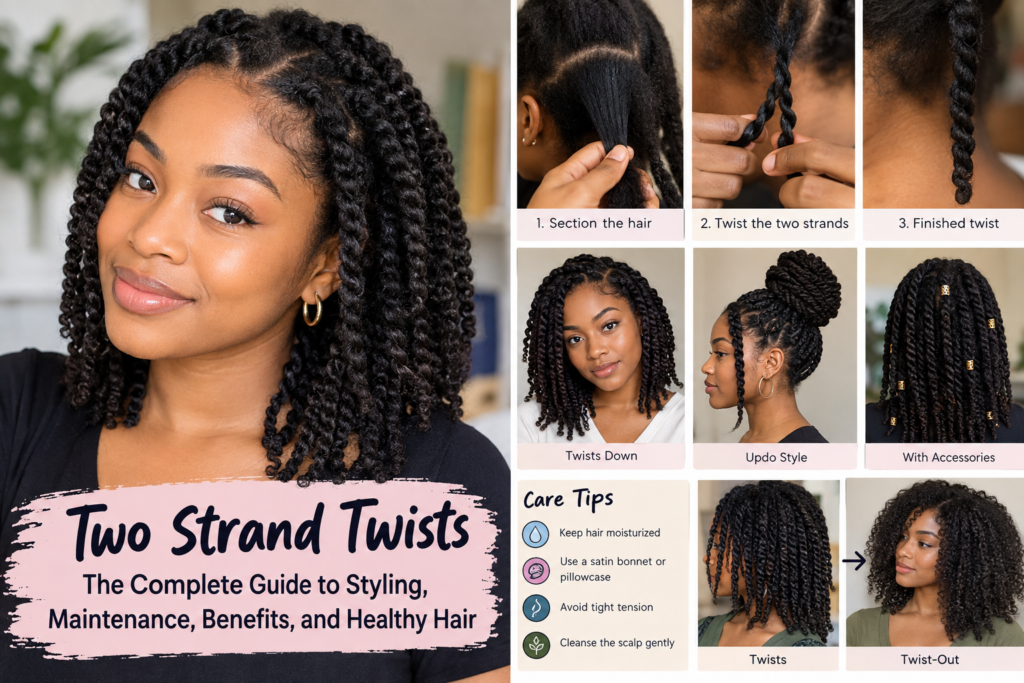

Two strand twists are one of the most recognisable and versatile hairstyles for natural hair. Simple to create and easy to personalise, this style works with different hair lengths, curl patterns, densities, and textures. Whether you want an everyday look, a low-manipulation hairstyle, or defined curls after taking the twists down, understanding the right technique and maintenance can make a major difference.
What Are Two Strand Twists?
The name explains the basic technique. A section of hair is divided into two smaller sections, then wrapped around each other from the roots to the ends. The finished style creates a rope-like look that can be worn loose, pinned up, accessorised, or later unravelled into a twist-out.
The beauty of the style is that it has no single look. Larger sections can create chunky, relaxed twists, while smaller sections produce a more detailed appearance. Hair length, density, texture, moisture level, and the amount of tension used during styling can all change the final result.
Why This Style Remains Popular
One major reason people continue choosing twists is convenience. Once the hair is divided and twisted, you usually need to manipulate it less every morning. This can make the style particularly useful for people who want to reduce daily combing, brushing, and heat styling.
You can also change the style without starting over. You can wear twists down, gather them into a ponytail, arrange them into an updo, or accessorise them with cuffs and other hair accessories. When you eventually unravel them, you can get a defined twist-out with a different texture and shape.
Another advantage is that natural hair remains relatively accessible. Unlike some installations that completely cover natural hair, twists let the wearer reach the scalp and moisturise the hair as needed.
Choosing the Right Twist Size
Section size significantly affects both appearance and maintenance. Chunky twists are generally quicker to install and can create a fuller, more relaxed look. They are also useful when someone wants a simple style without spending many hours separating the hair into tiny sections.
Medium twists balance definition and installation time. They can look neat without requiring the extensive sectioning associated with mini twists.
Mini twists offer a more detailed appearance and can be useful when someone wants a longer-lasting low-manipulation style. However, smaller sections also mean more time for installation and removal. Choose a size that suits your hair density, lifestyle, and patience rather than assuming smaller automatically means better.
How to Prepare Your Hair
Good preparation often determines how comfortable and polished the finished style will be. Starting with clean, conditioned, and properly detangled hair gives the twists a smoother foundation. Professional styling guidance often recommends cleansing first, then following with conditioner or a moisturising treatment.
The hair should also be manageable before twisting. Extremely dry or tangled hair can make sectioning uncomfortable and may increase unnecessary pulling. A leave-in conditioner or suitable moisturising product can help make the strands easier to work with.
Some people prefer twisting on damp hair because it makes the strands more flexible, while others prefer stretched hair for a longer appearance and more uniform sections. There is no universal method. Your hair’s texture and how you want the finished twists to look should guide the choice.
Creating a Neat Finish
Once the hair is prepared, divide it into manageable sections. Take one section and separate it into two relatively even pieces. Wrap one piece around the other consistently from the root toward the end, maintaining gentle and even tension.
The key word is gentle. A twist does not need to feel tight to look neat. Pulling too hard at the roots can put unnecessary stress on the scalp and hairline. The American Academy of Dermatology Association warns that repeated tension from tight hairstyles can contribute to traction alopecia, a form of hair loss caused by prolonged pulling.
At the ends, the finishing technique depends on your texture and length. Some naturally curly or coily hair holds the twist without additional securing, while straighter or looser textures may need a small finishing technique to prevent unraveling.
Caring for Twists After Styling
Maintenance matters as much as installation. Sleeping with a satin or silk bonnet, scarf, or pillowcase can reduce friction and help the style stay neater. Nighttime protection can also help reduce unnecessary rubbing against cotton bedding.
Moisture should be managed according to the needs of your hair. If your hair feels dry, a lightweight water-based moisturiser or leave-in product may help. However, using too much heavy product can cause buildup and make the twists feel coated.
Scalp care also matters. A protective style should not mean ignoring the scalp. If you wear your twists for an extended period, you may need gentle cleansing. The goal is to keep the scalp comfortable and clean without aggressively disturbing the twists.
How Long Can Twists Last?
No exact expiration date applies to everyone. Hair texture, twist size, installation technique, nighttime protection, activity level, and maintenance all affect longevity. Some professionally guided routines suggest well-maintained twists can stay presentable for about two to three weeks, though results vary.
Keeping a style in longer is not automatically better. As the hair grows and shed strands remain within the twists, tangling and buildup can increase. If the scalp becomes uncomfortable, the roots become heavily tangled, or the hair starts breaking during maintenance, it may be time to remove the style.
Twists and Healthy Hair Practices
A hairstyle itself does not magically make hair grow faster. Hair grows from the follicles, while protective styling can reduce some daily manipulation and breakage. In other words, the potential benefit is more about length retention and reduced handling than creating a special growth effect.
The American Academy of Dermatology Association specifically recommends avoiding hairstyles that continuously pull on the hair. Don’t ignore pain, stinging, crusting, or visible tension around the hairline.
If a style hurts, feels excessively tight, or causes persistent scalp irritation, loosening or removing it is a sensible response. Hair care should never depend on tolerating pain for appearance’s sake.
Turning Twists Into a Twist-Out
One of the most useful features of two-strand twists is that the hairstyle can create another look after you remove them. Once the twists are completely dry, carefully unravelling them can reveal waves, curls, or coils shaped by the twisting process.
The final pattern depends on the original section size, hair texture, moisture level, products, and drying process. Smaller twists often create a more defined pattern, while larger twists can produce bigger and softer sections.
Take-down should be gentle. Rushing can cause unnecessary tangling and breakage, especially when the hair has been twisted for an extended period.
Common Mistakes to Avoid
One common mistake is twisting the hair too tightly. A very firm root may look neat at first, but constant tension can stress the scalp and edges. Another issue is using too much product to create definition. Heavy buildup can make the hair difficult to cleanse and may leave the twists dull or sticky.
Ignoring the ends is another mistake. The ends are the oldest part of the hair and deserve careful handling. Keeping them moisturised and avoiding unnecessary friction can help maintain the style’s overall appearance.
Finally, don’t treat every hair type the same. What works beautifully for dense, tightly coiled hair may not produce the same result on fine or loosely curled hair. Experimentation, observation, and gentle handling are more useful than following one rigid formula.
Frequently Asked Questions
Are two strand twists good for natural hair?
They can be a useful low-manipulation styling option because they reduce the need for daily styling. Their benefits depend on proper installation, reasonable tension, and suitable maintenance.
Can you sleep with twists?
Yes. Many people protect their twists overnight with a satin or silk bonnet, scarf, or pillowcase. This can reduce friction and help the style remain neater.
Can twists help retain hair length?
They may help with length retention by reducing frequent manipulation, combing, and heat exposure. However, they do not directly make hair grow faster.
How often should twists be moisturised?
There is no single schedule for everyone. Hair that feels dry may need additional moisture, while hair that still feels comfortable may require less. Avoid excessive product application because buildup can become a problem.
Can twists damage the hair?
They can contribute to damage if installed too tightly, repeatedly placed in the same tension-heavy style, or left neglected for too long. Persistent pain or tension around the hairline is a warning sign that you should loosen or remove the style.
Final Thoughts
Two strand twists remain popular because they combine simplicity, versatility, and a natural appearance. You can adapt them to different lengths and textures, wear them as a finished style, or use them to create a twist-out later. With clean preparation, balanced moisture, gentle tension, and proper nighttime protection, they can become a practical part of a natural-hair routine.
The most important lesson is to work with your own hair rather than forcing it into a particular look. A comfortable installation, a healthy scalp, careful handling, and regular attention to your strands’ condition will always matter more than making the twists as tight or long-lasting as possible.