
Introduction
Few traditional Indian breakfasts are as simple, comforting, and recognizable as puttu. Made mainly with rice flour, freshly grated coconut, water, and a little salt, this steamed dish has become one of the most beloved foods associated with Kerala. Its soft, crumbly texture and gentle coconut flavor make it a natural companion to spicy curries, ripe bananas, and other traditional sides. More than a breakfast, it reflects Kerala’s everyday food culture and the importance of rice and coconut in the region’s cuisine.
What makes this dish especially interesting is how it’s cooked. Instead of frying or baking, the rice mixture is gently steamed inside a cylindrical vessel. The result is light, moist, and delicately layered. Although it looks simple, preparing it well requires attention to the amount of water, the flour’s texture, and how the ingredients are arranged inside the steamer.
What Is Puttu?
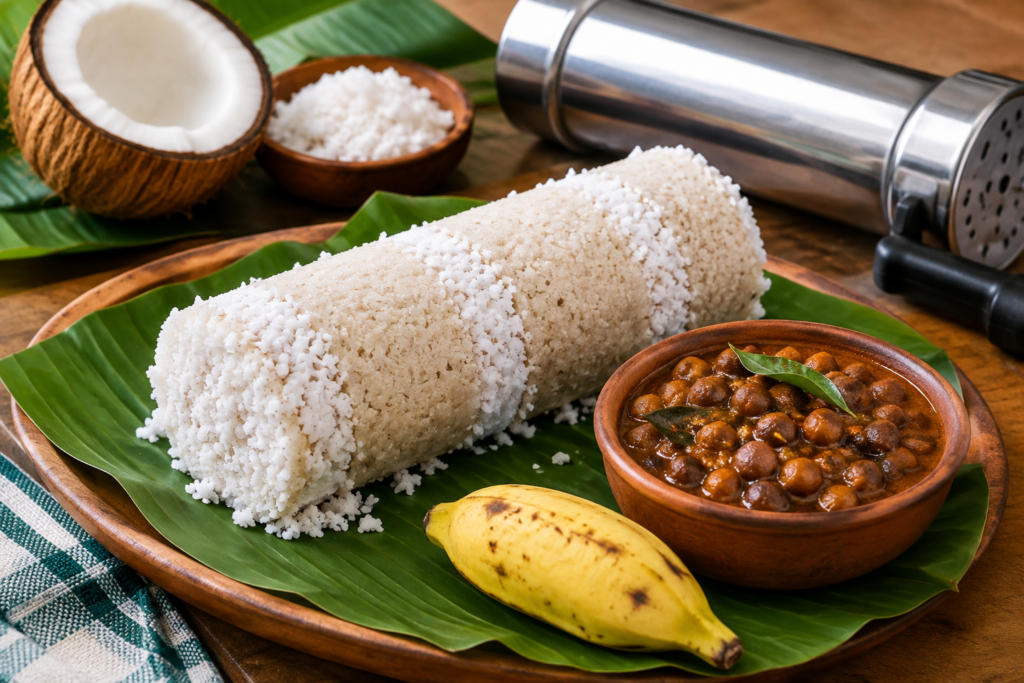
Puttu is a steamed rice-flour preparation traditionally made by placing moistened coarse rice flour and grated coconut in alternating layers inside a special cylindrical mould. Steam rises through the mould and cooks the mixture without requiring oil. The finished food is usually pushed out of the mould as a soft cylinder and served immediately while warm.
The dish is strongly associated with Kerala, where it remains a familiar breakfast in homes and food establishments. It is also found in parts of Tamil Nadu, Karnataka, and Sri Lanka, with local ingredients and techniques creating regional variations. This wider presence is one reason its exact historical origin is hard to define with certainty. Some discussions connect its early history with South Indian culinary traditions beyond Kerala, while popular stories about its introduction by Portuguese traders remain debated rather than firmly established.
Why Rice and Coconut Matter
The ingredients in traditional puttu are closely tied to Kerala’s food landscape. Rice has long been a staple in South Indian cooking, while coconut appears throughout Kerala cuisine, from curries to desserts. Combining the two creates a dish that is both filling and naturally aromatic.
Freshly grated coconut also gives the steamed rice mixture its characteristic softness and mild sweetness. Because the recipe uses so few ingredients, their quality makes a noticeable difference. Coarsely ground rice flour provides the best traditional texture, while fresh coconut adds moisture and richness without complicated seasoning.
How Puttu Is Traditionally Prepared
Preparing good puttu begins with getting the rice flour to the correct moisture level. Add water gradually to the flour with salt, and rub the mixture gently until it reaches a damp, coarse texture. It should hold together briefly when squeezed but should not become a wet paste. This balance matters because flour that is too dry can produce a crumbly result, while too much moisture can make the finished dish dense.
The prepared flour is then placed inside a puttu maker, traditionally a tall cylindrical steamer. Add grated coconut in layers between the rice mixture, creating the familiar alternating pattern. Do not compress the flour tightly, as steam needs room to travel through the mixture and cook it evenly.
Once the mould is filled, place it over boiling water. As steam rises through the cylinder, the rice flour gradually cooks. When steam has passed through the upper part of the mould and the mixture has developed its characteristic soft texture, carefully remove it and push it onto a serving plate.
The Traditional Puttu Maker
The equipment used to make this breakfast is part of its cultural identity. A conventional puttu maker has a lower vessel containing water and an upper cylindrical section that holds the rice flour and coconut. The perforated structure lets steam rise through the food.
Traditional versions have also used natural materials. Kerala Tourism describes chiratta puttu, in which the mixture is steamed inside a coconut shell. The shell gives the food a distinctive shape and adds another connection to the region’s long-standing use of coconut in cooking.
Modern kitchens may use metal steamers or attachments fitted to pressure cookers. The equipment may have changed, but the basic principle remains the same: steam gently cooks loose layers of rice flour and coconut.
What Does Puttu Taste Like?
On its own, the flavor is mild rather than strongly spiced. The rice flour provides a neutral, slightly nutty base, while fresh coconut adds a delicate sweetness and creamy texture. The dish is meant to pair with stronger accompaniments, which is why it can taste completely different depending on what you serve alongside it.
The classic savory pairing is kadala curry, a flavorful curry made with black chickpeas. The soft rice and coconut absorb some of the curry’s sauce, creating a satisfying contrast between the mild steamed cake and the spicy, savory gravy. Kerala Tourism identifies puttu with kadala curry as a classic breakfast combination enjoyed across Malayali households.
For people who prefer something sweet, ripe banana, sugar, jaggery, or coconut milk can provide a completely different experience. The banana’s natural sweetness pairs particularly well with lightly salted rice and coconut.
Popular Regional Variations
Although the traditional version uses rice flour, you can adapt the basic idea with other ingredients. Different grains and flours can create variations with their own color, flavor, and texture. Ragi and wheat versions are popular adaptations for cooks looking for alternatives to ordinary rice flour.
Kerala’s culinary traditions also include distinctive preparations such as chiratta puttu and kappa puttu. Kappa puttu combines grated tapioca with rice flour and coconut, producing a heartier variation that can be served with fish or meat-based curries. Kerala Tourism describes kappa puttu as an example of how two familiar ingredients can come together in a single steamed preparation.
These variations show the dish isn’t limited to one rigid recipe. Instead, it provides a basic cooking technique that can adapt to local ingredients and personal preferences.
Is Puttu a Healthy Breakfast?
The nutritional value of a serving depends on the ingredients, portion size, and accompaniments. A basic preparation provides carbohydrates primarily from rice flour, while coconut contributes fat and some fiber. Paired with black chickpea curry, the meal also adds plant-based protein and more fiber.
Because the traditional preparation is steamed rather than deep-fried, it does not require large amounts of cooking oil. However, that does not automatically make every serving low in calories. Coconut, sweeteners, ghee, and rich curries can substantially change the nutritional profile.
For a balanced breakfast, pair the dish with a protein-rich accompaniment such as chickpea curry and enjoy it with fruit or vegetables. As with any traditional food, portion size and the overall meal matter more than labeling the dish as simply healthy or unhealthy.
Why Puttu Remains Popular
The lasting appeal of this breakfast comes from its combination of simplicity and versatility. It does not require a long list of spices or complicated preparation. At the same time, the finished dish can be paired with sweet or savory foods, allowing the same basic preparation to suit different tastes.
Traditional breakfasts also carry a strong emotional connection. For many families, familiar foods connect to home kitchens, early mornings, family gatherings, and regional identity. That cultural familiarity helps explain why a humble steamed rice preparation still appears on breakfast tables even as modern eating habits change.
Frequently Asked Questions
What is puttu made from?
Traditional puttu is made mainly from coarse rice flour, freshly grated coconut, water, and salt. Mix the ingredients and layer them before steaming in a cylindrical mould.
Is puttu originally from Kerala?
Puttu is strongly associated with Kerala, but similar preparations are also found in other parts of South India and Sri Lanka. Its precise historical origin is debated, so it is safer to describe Kerala as one of its most important culinary homes rather than claim a completely settled origin.
What is the best curry to eat with puttu?
Kadala curry, made with black chickpeas, is one of the most traditional and widely recognized accompaniments. Its spicy and savory flavor contrasts well with the mild rice and coconut.
Can puttu be made without a traditional steamer?
Yes. Modern cooks can use suitable steaming equipment or pressure-cooker attachments designed for the purpose. The key is to let steam pass through the loosely layered flour mixture.
Is puttu sweet or savory?
It can be enjoyed either way. Traditional meals often serve it with savory curries, while banana, sugar, jaggery, or coconut milk can create a sweeter version.
Conclusion
Puttu represents the beauty of traditional South Indian cooking: a handful of ordinary ingredients transformed through a thoughtful technique. Rice flour and coconut may seem simple, but steaming them together creates a distinctive texture that works beautifully with everything from spicy black chickpea curry to ripe banana. Its connection with Kerala’s food culture, along with its regional variations, has helped it remain relevant across generations.
The dish also demonstrates why traditional foods deserve to be understood beyond their appearance. Its history reflects South India’s broader culinary traditions, while its preparation shows how steaming, local ingredients, and careful texture can create something memorable without excessive complexity. Whether enjoyed as a classic breakfast or explored through modern variations, puttu remains a warm and recognizable part of Kerala’s culinary identity.