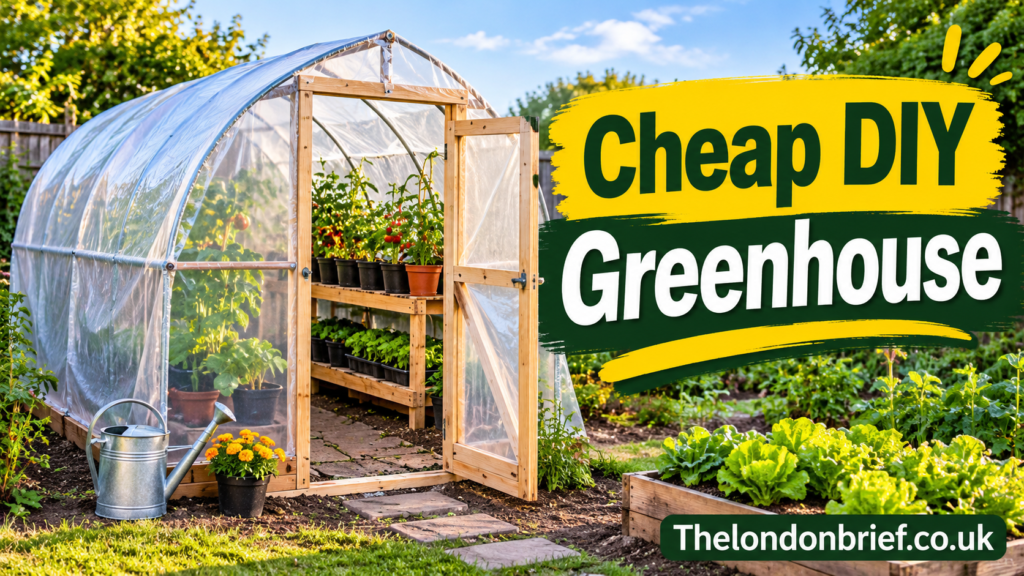

Starting seeds in March while frost still clings to the ground feels like a small victory, and a cheap DIY greenhouse is what makes it possible. You do not need a glossy kit or a contractor to get there. With a few lengths of pipe, some clear plastic, and a free weekend, most gardeners can build a structure that stretches the growing season by several weeks on both ends. This guide covers the practical details that separate a lasting build from a flimsy one.
Why Smart Planning Beats Big Spending
The biggest savings come from planning, not from bargain hunting. A greenhouse is a shelter that traps solar heat and protects plants from wind, frost, and heavy rain. Anything that does those three jobs well deserves the name. Before you buy a single screw, decide what you want to grow, how much space you need, and whether the structure will stay up all year or only for a season. Those answers guide every material choice that follows.
Pick the Right Spot First
Location matters more than most beginners expect. Look for a flat area that receives at least six hours of direct sun, ideally with morning light that warms the space early. Keep the site away from large trees that cast shade or drop branches, and avoid low pockets where cold air and water collect. In the Northern Hemisphere, set the long side facing south to capture the most winter sunlight. A nearby water source and a fence or wall that blocks the prevailing wind will save you effort later.
Materials That Stretch Your Budget
Three materials dominate low-cost builds. PVC pipe or metal conduit bends easily into hoops, cattle panels form a sturdy arch that handles snow, and reclaimed lumber makes simple frames for almost nothing. For the covering, UV-stabilized polyethylene film at six mil thickness is the usual choice, and it typically lasts three to four seasons. Twin-wall polycarbonate costs more upfront but insulates better and can last a decade or longer. Old windows and storm doors from salvage yards or neighbors are excellent free options if you are patient.
Building a Simple Hoop House
A hoop house is the fastest route to a cheap DIY greenhouse for most people. Mark out a rectangle, perhaps four feet wide and eight feet long, and fasten two-by-four boards together as a base frame. Drive lengths of rebar about a foot into the soil along both sides, then slip half-inch PVC pipe over them to form arches roughly two feet apart. Run a ridge pole along the top for rigidity, drape the plastic over the frame, and pull it tight. Secure the edges with clamps or bury them in soil, then build a simple door frame at one end.
Turning Old Windows Into a Garden Room
If you like a more charming look, a reclaimed window greenhouse is hard to beat. Gather windows of similar size, check for cracks, and sand any peeling paint. Test or replace painted frames made before 1978, since older paint may contain lead. Build a box frame, attach windows as the walls, and hinge one as a lid. Seal the gaps with weatherstripping and the result works beautifully as a cold frame for hardening off seedlings.
Managing Heat and Airflow
Overheating harms more greenhouse plants than cold does. On a sunny day, the air inside can climb 20 degrees Fahrenheit or more above the outdoor temperature within an hour. Build ventilation in from the start with roll-up sides, a door at each end, or a hinged roof panel. A common rule of thumb is to size vent openings at roughly 15 to 20 percent of the floor area. In colder months, dark water barrels or jugs soak up daytime warmth and release it overnight, giving a free boost against frost.
What to Grow Inside
Cool-season crops are the natural winners in a budget structure. Lettuce, spinach, kale, and radishes keep producing under plastic through autumn and winter in mild climates. In spring, the space becomes a nursery where tomatoes, peppers, and basil get a head start of four to six weeks. Move seedlings outdoors for gradually longer periods before planting them out. Herbs like parsley and cilantro also appreciate the shelter.
Mistakes Worth Avoiding
The most common error is skipping the anchoring. Wind can lift a lightweight frame and shred the plastic, so bury the edges, stake the hoops, or add ground anchors. Another slip is buying thin film that breaks down quickly under summer sun. Overcrowded plants invite fungal disease, so give them room and keep the air moving. Finally, avoid building too small, because a space that feels roomy on paper fills up fast once trays and pots arrive.
Keeping It in Good Shape
Wash the covering once or twice a year with mild soapy water so light passes through freely. Check seams and fasteners after storms, and patch small tears right away with greenhouse repair tape. Brush heavy snow off gently, since the weight can bend hoops. In summer, add shade cloth rated at thirty to fifty percent to prevent leaf scorch. Rinse trays between crops to reduce the carryover of pests and disease.
Frequently Asked Questions
How much does a cheap DIY greenhouse cost?
A basic PVC hoop house often runs between 75 and 250 dollars depending on size and covering, and reclaimed window builds can cost even less. Prices vary by region and by what you can find secondhand, so compare local suppliers before you buy.
Can a budget greenhouse survive winter?
Yes, if it is anchored well and built with a sturdy arch. Cattle panel frames handle snow loads better than thin PVC, and a double layer of film with a small air gap adds noticeable insulation.
Do I need a permit to build one?
Many areas exempt small, temporary garden structures, but rules differ widely. A quick call to your local building office will confirm what applies to your property.
Final Thoughts
A greenhouse is about control, not cost. With careful siting, a smart choice of materials, and attention to airflow, a cheap DIY greenhouse can deliver earlier harvests, stronger seedlings, and a cozy place to garden when the weather turns. Start small, learn how the space behaves through one season, and improve it as you go. Most growers find the first build teaches more than any guide, and the second one comes out even better.