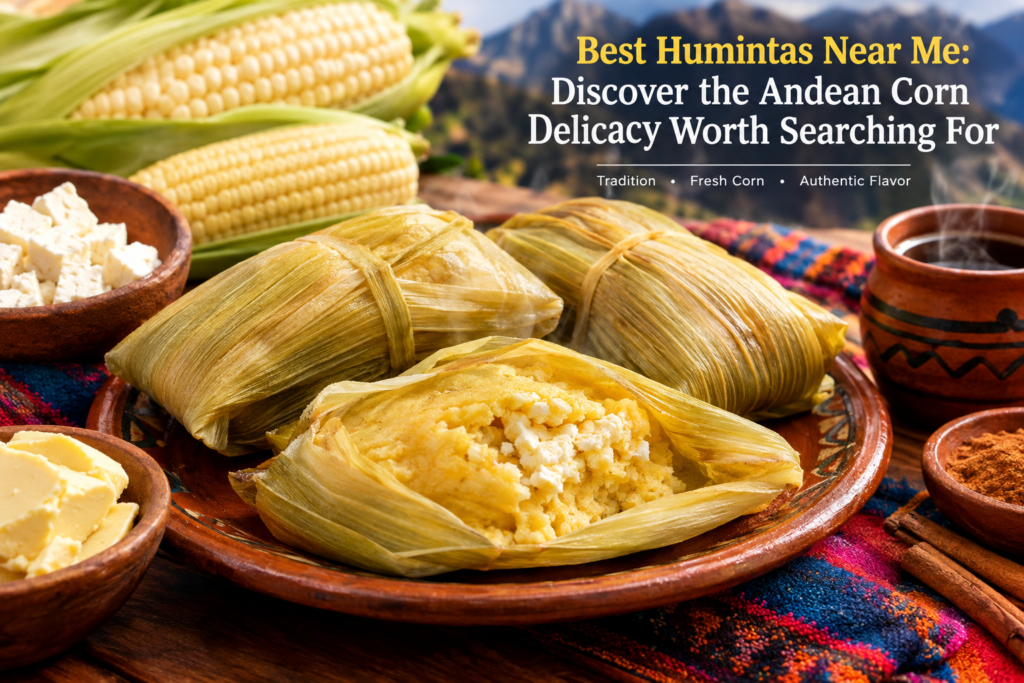

If you have ever searched for best humintas near me, you may already know that finding a truly satisfying one is about more than simply locating a nearby food stall. Humintas are a beloved Andean corn delicacy, traditionally prepared with fresh corn, wrapped in corn husks, and cooked until soft, fragrant, and comforting. With their rustic appearance and rich cultural history, they have earned a special place in South American food traditions.
What makes humintas particularly fascinating is their simplicity. Fresh corn is the star, while ingredients such as cheese, butter or lard, sugar, salt, and spices can transform the basic mixture into either a savory or sweet treat. The exact preparation changes from one region and family to another, which is part of what makes searching for an authentic huminta such a delicious adventure.
What Exactly Are Humintas?
Humintas, also commonly called humitas in several South American countries, are traditionally made from fresh young corn that is ground into a soft mixture. The corn preparation is then wrapped in its own husks and cooked, commonly by steaming or boiling. In some Bolivian traditions, humintas are also baked.
The dish has deep Andean roots and is associated particularly with Bolivia, Peru, Ecuador, Chile, Argentina, and surrounding regions. In Bolivia, the name “huminta” is especially familiar, while “humita” is more commonly used in neighboring countries.
Unlike many modern corn-based snacks, traditional humintas are not dependent on complicated ingredients. Their character comes from the quality of the corn, the texture of the ground mixture, the seasoning, and the cooking method. That simplicity is exactly why a well-made huminta can be surprisingly memorable.
Why Humintas Have Such a Special Flavor
The first thing you notice about a good huminta is its aroma. As the corn cooks inside its husk, the natural fragrance of the corn becomes part of the experience. Opening the husk releases a warm, slightly sweet smell that immediately signals something homemade.
Texture is equally important. A properly prepared huminta should feel tender and moist without becoming watery or mushy. Fresh corn gives the mixture a naturally creamy consistency, while cheese can provide a pleasant contrast in savory versions.
Some recipes include anise, cinnamon, sugar, or other seasonings. Others rely on cheese and salt for a more savory character. This variety means that two humintas served in different places can taste completely different while both remaining faithful to the broader tradition.
Where to Look for the Best Humintas Near Me
When people search for best humintas near me, they are usually hoping to discover a place where the dish tastes homemade rather than mass-produced. That is a sensible approach because humintas are strongly connected to traditional preparation.
Local Latin American restaurants, Bolivian eateries, South American bakeries, family-owned food businesses, and traditional markets can all be worth exploring. In some communities, humintas may not appear as a permanent menu item. They can be prepared on particular days, during seasonal periods, or when fresh corn is readily available.
This is why asking about the day’s preparation can be more useful than relying only on a restaurant menu. A freshly prepared batch may have a noticeably better texture and aroma than one that has been sitting for hours.
Freshness Makes a Big Difference
Freshness is one of the most important things to consider when choosing a huminta. Because the dish is built around corn, the quality of that corn has a direct effect on the final result.
Look for a huminta that feels moist and tender rather than dry or excessively firm. The corn should provide a recognizable natural sweetness, while the seasoning and cheese should support rather than overpower it.
The husk can also provide a clue. Traditional preparation uses corn leaves as the wrapping, allowing the huminta to cook gently while retaining its characteristic aroma. The presentation does not need to be fancy. In fact, the rustic appearance is part of the charm.
Sweet or Savory: Which Huminta Should You Try?
One of the most enjoyable parts of discovering humintas is deciding which style suits your taste.
Savory humintas commonly combine fresh corn with cheese and seasonings. Depending on the regional recipe, they may include salt, anise, herbs, or other ingredients. The result can be rich without being overwhelmingly heavy.
Sweet humintas take advantage of the natural sweetness of fresh corn. Sugar, cinnamon, raisins, or other ingredients may be added depending on the tradition. These versions can feel closer to a comforting afternoon snack or lightly sweet breakfast.
If you are visiting a restaurant that offers both varieties, trying one of each is an excellent way to understand how much the same basic ingredient can change with different preparation techniques.
Humintas and Tamales Are Not Quite the Same
Humintas are often compared with tamales because both can involve corn mixtures wrapped in leaves and cooked. However, the comparison should not erase their differences.
Traditional humintas generally use fresh young corn, often called choclo in parts of South America. Tamales can use a different type of corn preparation, including dough made from dried or processed corn. Their fillings, seasoning, texture, and cooking methods also vary widely.
In other words, humintas belong to the same broad family of wrapped corn foods, but they have their own identity. That distinction becomes especially noticeable when you taste a fresh, traditionally prepared huminta.
The Cultural Story Behind Every Bite
Humintas are more than a convenient snack. Their preparation reflects the importance of corn in Andean food culture.
Corn has played a central role in the food traditions of the Andes for centuries, and preparations based on fresh corn continue to connect everyday cooking with older culinary practices. The technique of grinding corn, wrapping it in its husk, and cooking it gently is remarkably simple, yet it has survived across generations.
The dish also reflects the way food traditions evolve. Regional ingredients and family preferences have created many variations. Some communities favor cheese, while others emphasize sweetness or particular herbs and spices. That means there is no single flavor that can represent every huminta.
How to Recognize a Well-Made Huminta
When you finally find a place that catches your attention, pay attention to a few simple details.
The huminta should have a pleasant corn aroma when opened. Its texture should be tender enough to eat easily but firm enough to hold its shape. If cheese is included, it should complement the corn rather than completely dominate it.
Balance is another important quality. A sweet huminta should not taste like a heavily sugared dessert unless that is specifically the style being offered. A savory version should allow the corn to remain noticeable beneath the cheese and seasoning.
Most importantly, it should taste fresh. Humintas are humble food, so freshness and preparation technique often matter more than elaborate presentation.
Why Local Recommendations Can Be Better Than Generic Searches
Finding the best humintas near me often requires a little local curiosity. Search results can identify businesses, but local diners can tell you which places consistently prepare the dish fresh.
Ask friends who enjoy Latin American food, check recent customer comments, or ask restaurant staff when humintas are usually made. A recommendation from someone who has actually tasted the dish can help you discover smaller family-run businesses that may not have a large online presence.
It is also worth remembering that “best” is subjective. One person may prefer a soft, cheesy huminta, while another may enjoy a sweeter version with cinnamon. The right choice ultimately depends on the flavor and texture you enjoy most.
A Simple Way to Enjoy Your First Huminta
Humintas do not require an elaborate meal around them. They can be enjoyed warm as a snack, breakfast item, afternoon treat, or part of a larger South American meal.
If your huminta is served hot, give it a moment after opening the husk. The steam can be intense, and allowing it to cool slightly makes it easier to appreciate the texture and flavor.
Pairing it with a warm drink can also work beautifully. Depending on the region and personal preference, coffee, tea, or traditional corn-based drinks can complement the gentle sweetness of the corn.
Frequently Asked Questions About Humintas
What are humintas made from?
Humintas are primarily made from fresh corn that is ground into a soft mixture and wrapped in corn husks. Depending on the recipe, cheese, butter or lard, sugar, salt, anise, cinnamon, raisins, or other seasonings may be added.
Are humintas sweet or savory?
They can be either. Savory versions often contain cheese and salt, while sweet versions may include sugar, cinnamon, raisins, or other ingredients. Regional recipes differ considerably.
Are humintas the same as tamales?
No. They are related in the sense that both are traditional wrapped corn preparations, but humintas typically use fresh corn, while many tamales use dough made from processed or dried corn. Their textures and recipes can therefore be quite different.
Where can I find authentic humintas?
Look for Bolivian, Peruvian, Ecuadorian, or broader South American restaurants, bakeries, markets, and family-run food businesses. Availability can depend on location and season, so it is useful to ask when fresh humintas are prepared.
What should I look for when searching for the best humintas near me?
Focus on freshness, texture, traditional preparation, quality corn, and a good balance of flavors. Recent local recommendations can also help you identify places where humintas are prepared regularly rather than simply listed on a menu.
Final Thoughts on Finding the Best Humintas Near Me
The next time you search for best humintas near me, look beyond distance and popularity. The most rewarding discovery may be a small restaurant, market vendor, or family-owned kitchen where the dish is still prepared with care.
A good huminta does not need an extravagant presentation. Fresh corn, a fragrant husk, balanced seasoning, and careful cooking can create something genuinely memorable. Whether you prefer yours sweet and gently spiced or savory and filled with cheese, exploring different versions is part of the fun.
Ultimately, the search for best humintas near me is really a search for authentic flavor and local food culture. Once you find a version that tastes fresh, comforting, and thoughtfully prepared, you may understand why this humble Andean specialty continues to attract new admirers far beyond its traditional home.