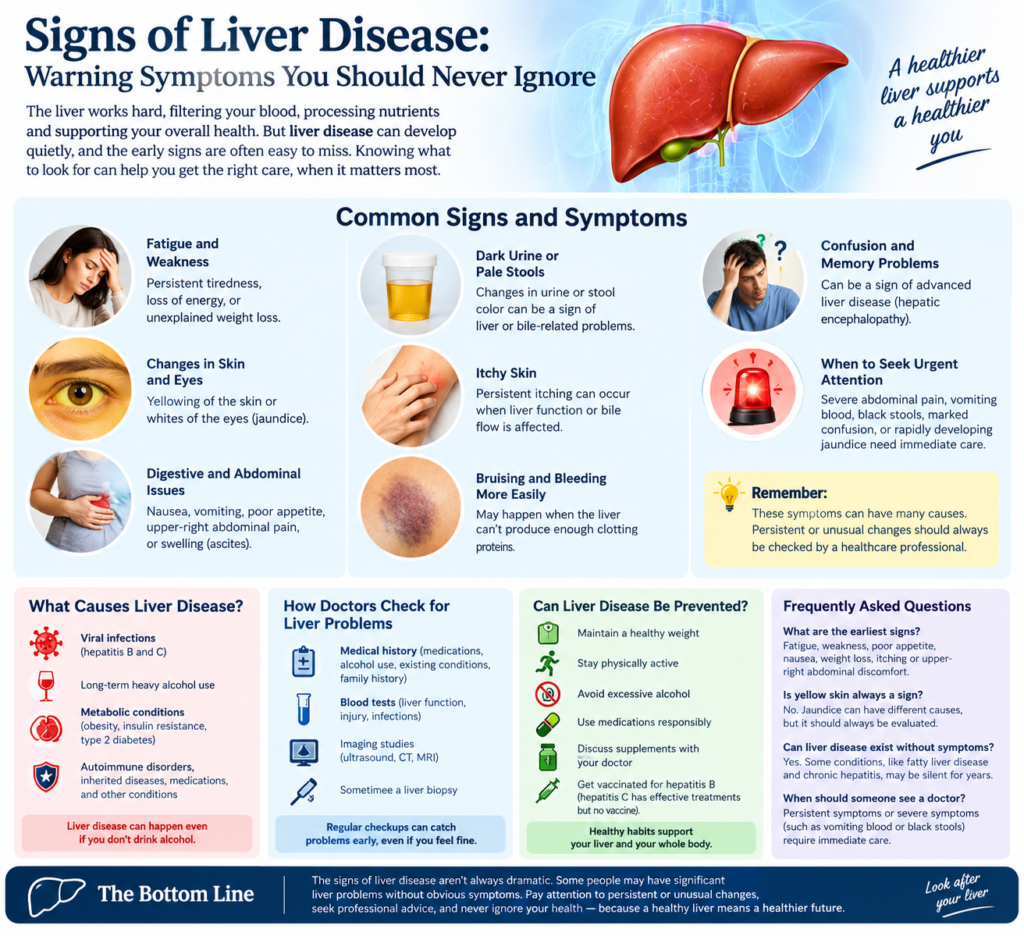

When it comes to health, some of the most important warning signals can be surprisingly easy to overlook. The signs of liver disease may begin quietly, sometimes appearing as nothing more than tiredness, poor appetite, or mild abdominal discomfort. That is one reason liver health deserves more attention, whether you are a celebrity constantly in the spotlight or simply trying to stay healthy in everyday life.
The liver performs hundreds of essential jobs, including helping process nutrients, supporting digestion, and removing substances the body no longer needs. Different conditions, including viral hepatitis, fatty liver disease, alcohol-related liver disease, and cirrhosis, can affect how well it functions. Importantly, some liver conditions cause few or no noticeable symptoms during their early stages.
Why Liver Health Can Be Difficult to Recognize
One of the biggest challenges with liver disease is that symptoms do not always appear early. A person can have liver damage without feeling seriously ill, particularly with conditions such as metabolic dysfunction-associated steatotic liver disease, formerly known as nonalcoholic fatty liver disease.
When symptoms do occur, they can be vague. Persistent tiredness, nausea, reduced appetite, unexplained weight loss, itching, or discomfort in the upper-right side of the abdomen may have many possible causes. They do not automatically mean someone has liver disease, but persistent or unexplained symptoms deserve medical attention.
Fatigue and Unexplained Weakness
Feeling exhausted after a demanding schedule is common, particularly for people who travel frequently, work long hours, or have irregular sleep patterns. However, persistent fatigue can also occur with liver conditions.
Fatigue may appear alongside weakness, reduced appetite, or unintended weight loss. Because these symptoms are not unique to liver problems, they should not be used as a diagnosis on their own. Instead, they can be a reason to discuss ongoing symptoms with a healthcare professional.
Changes in the Skin and Eyes
One of the more recognizable warning signs is jaundice, which causes the skin or whites of the eyes to develop a yellowish appearance. Jaundice occurs when bilirubin, a substance produced during the normal breakdown of red blood cells, builds up in the body.
Jaundice can have several causes, so it does not prove that liver disease is present. Nevertheless, yellowing of the skin or eyes should be medically evaluated rather than dismissed as a temporary change.
Digestive and Abdominal Warning Signs
The digestive system can also provide clues that something is wrong. Some people with liver problems experience nausea, vomiting, reduced appetite, or discomfort in the upper-right portion of the abdomen, where the liver is located.
Another important change is abdominal swelling. In advanced liver disease, fluid can accumulate in the abdomen, a condition called ascites. Swelling can also develop in the ankles, feet, or lower legs because of fluid retention.
Dark Urine or Pale Stools
Changes in urine or stool color can sometimes accompany liver or bile-related problems. Dark urine and unusually pale or clay-colored stools may occur with certain forms of hepatitis and other liver conditions.
These changes can have causes unrelated to serious liver disease, including hydration and other medical conditions. Still, persistent changes should be discussed with a healthcare professional, especially when they appear alongside jaundice, abdominal discomfort, nausea, or unusual fatigue.
Itchy Skin
Persistent itching can be another symptom associated with liver disease. It may become particularly noticeable when liver function or bile flow is affected.
Itchy skin is extremely common and can result from allergies, skin disorders, medications, and numerous other conditions. For that reason, itching alone is not enough to identify a liver problem. When it is persistent or accompanied by other symptoms, however, it is worth mentioning during a medical evaluation.
Bruising and Bleeding More Easily
Unexplained bruising or bleeding can sometimes occur when advanced liver disease interferes with the body’s ability to produce proteins involved in blood clotting.
A person who suddenly notices frequent unexplained bruises should not automatically assume the liver is responsible. Medications, nutritional deficiencies, blood disorders, and other health conditions can also cause abnormal bruising. A healthcare professional can determine the underlying reason through an examination and appropriate testing.
Confusion Can Be a Serious Warning
As significant liver disease progresses, some people can experience confusion, difficulty concentrating, memory problems, sleep changes, or unusual changes in behavior. These symptoms can be associated with hepatic encephalopathy, a complication that requires medical assessment.
Confusion or significant changes in alertness should never be ignored, particularly when they occur together with jaundice, abdominal swelling, vomiting blood, black stools, or other signs of serious illness. Advanced liver disease can lead to potentially dangerous complications and may require urgent medical care.
When Symptoms Need Urgent Attention
Some symptoms should be treated as potential medical emergencies rather than something to monitor at home. Severe abdominal pain, vomiting blood, black or bloody stools, marked confusion, or rapidly developing jaundice can require immediate evaluation.
Acute liver failure can develop over a short period and is a medical emergency. Certain medications, viral infections, and other causes can trigger it. Taking too much acetaminophen, for example, can cause severe liver injury and requires urgent medical attention if an overdose is suspected.
What Causes Liver Disease?
There is no single cause of liver disease. Viral infections such as hepatitis B and hepatitis C can damage the liver, while long-term heavy alcohol use can cause alcohol-related liver disease.
Metabolic conditions can also play a major role. Fat accumulation in the liver is increasingly recognized as an important health concern, particularly among people with obesity, insulin resistance, or type 2 diabetes. Certain autoimmune disorders, inherited diseases, medications, and other medical conditions can also affect the liver.
This is why assuming that liver disease is always connected to alcohol is misleading. A person who does not drink alcohol can still develop significant liver disease.
How Doctors Check for Liver Problems
Recognizing possible signs of liver disease is only the first step. Symptoms cannot confirm the condition or determine how much damage has occurred.
Doctors may review a person’s medical history, medications, alcohol use, existing health conditions, and family history. Depending on the situation, testing can include blood tests, imaging studies, and sometimes a liver biopsy. Blood tests may provide information about liver injury or function and can also help identify certain infections.
Regular medical checkups can therefore be valuable even when a person feels perfectly healthy. Some chronic liver conditions remain silent for years before symptoms become noticeable. Hepatitis C, for example, can remain without obvious symptoms for a long period while gradually causing liver damage.
Can Liver Disease Be Prevented?
Prevention depends on the underlying cause, but several healthy habits can support liver health. Maintaining a healthy weight, being physically active, avoiding excessive alcohol consumption, using medications responsibly, and discussing unnecessary supplements with a healthcare professional are sensible steps.
Vaccination can also help prevent hepatitis B. Unlike hepatitis B, hepatitis C does not currently have a vaccine, but effective oral treatments can cure most people who receive appropriate treatment.
The key message is not to panic over a single symptom. Instead, pay attention to persistent or unusual changes and seek professional advice when something does not seem right.
Frequently Asked Questions
What are the earliest signs of liver disease?
Early symptoms can be subtle or completely absent. When symptoms occur, they may include fatigue, weakness, poor appetite, nausea, unexplained weight loss, itching, or discomfort in the upper-right abdomen. Because these symptoms can have many causes, medical testing is needed for an accurate diagnosis.
Is yellow skin always a sign of liver disease?
No. Yellowing of the skin or eyes, known as jaundice, can have different causes. However, jaundice should always be medically evaluated because it can indicate a problem involving the liver, bile ducts, or another part of the body.
Can liver disease exist without symptoms?
Yes. Some liver diseases can remain silent for a long time. Fatty liver disease and chronic viral hepatitis are examples of conditions that may cause few or no noticeable symptoms in their earlier stages.
When should someone see a doctor?
Persistent fatigue, abdominal discomfort, unexplained weight loss, jaundice, dark urine, swelling, unusual bruising, or ongoing digestive symptoms deserve professional evaluation. Emergency care is appropriate for severe symptoms such as vomiting blood, black stools, severe confusion, or severe abdominal pain.
The Bottom Line
The signs of liver disease are not always dramatic, and some people may have substantial liver problems without obvious symptoms. That makes awareness and appropriate medical checkups particularly important.
Changes such as persistent fatigue, jaundice, abdominal swelling, itching, dark urine, unusual bruising, or confusion should not automatically be blamed on a busy lifestyle or temporary stress. They may have many explanations, but a healthcare professional can determine whether further testing is necessary.
For anyone in the public eye, celebrities included, health should never be judged from appearance alone. Looking energetic does not guarantee that every organ is functioning normally. Understanding the signs of liver disease, recognizing when symptoms need attention, and seeking reliable medical advice can make a meaningful difference in protecting long-term health.